LogicReader

The logic behind every schedule, visible.

LogicReader is a schedule-intelligence platform for engineering and infrastructure projects. Compare revisions, build defensible logic, assess risk, summarise huge programmes, and audit every dependency — on top of the Primavera P6, MS Project, or Asta schedules you already produce.

Built by CosmosPM Ltd · UK · private early-access platform · how we think

Try LogicReader free — UK-hosted, built for sample and anonymised schedules, with AI features powered by Anthropic (US). All schedule calculations are deterministic; AI is optional, off by default, and can run on your own account or key.

Free, and free to keep using — open a schedule, read it, and work on it. We ask for your email so we can send you a confirmation link; nothing is shared. Paid plans, for building and exporting at scale, follow shortly — tell us what you need and we will shape them around it.
What it does

Seven things, all on the same canvas. Pick any one as the entry point — the others come along for free.

Compare

Two revisions, one canvas

Build

Draw logic from scratch

Assess

Logic health, scored

View

25k tasks, interactive

Summarise

From thousands to dozens

Control risk

Risks on the graph

Audit

Every dependency, traced

Why the logic comes first

A schedule is not a bar chart. It is the moment a looping process — do, check, redo — agrees to stop: every loop unrolled into a fixed number of passes, priced into the budget, signed by everyone. The logic is what gives the dates their meaning.

LogicReader puts that logic on the canvas — visible, interrogable, defensible — so every stakeholder can see why a date is what it is, and stand behind it.

The full argument lives at how we think.

Honest screenshots

Three capabilities live on the platform right now. No mock-ups.

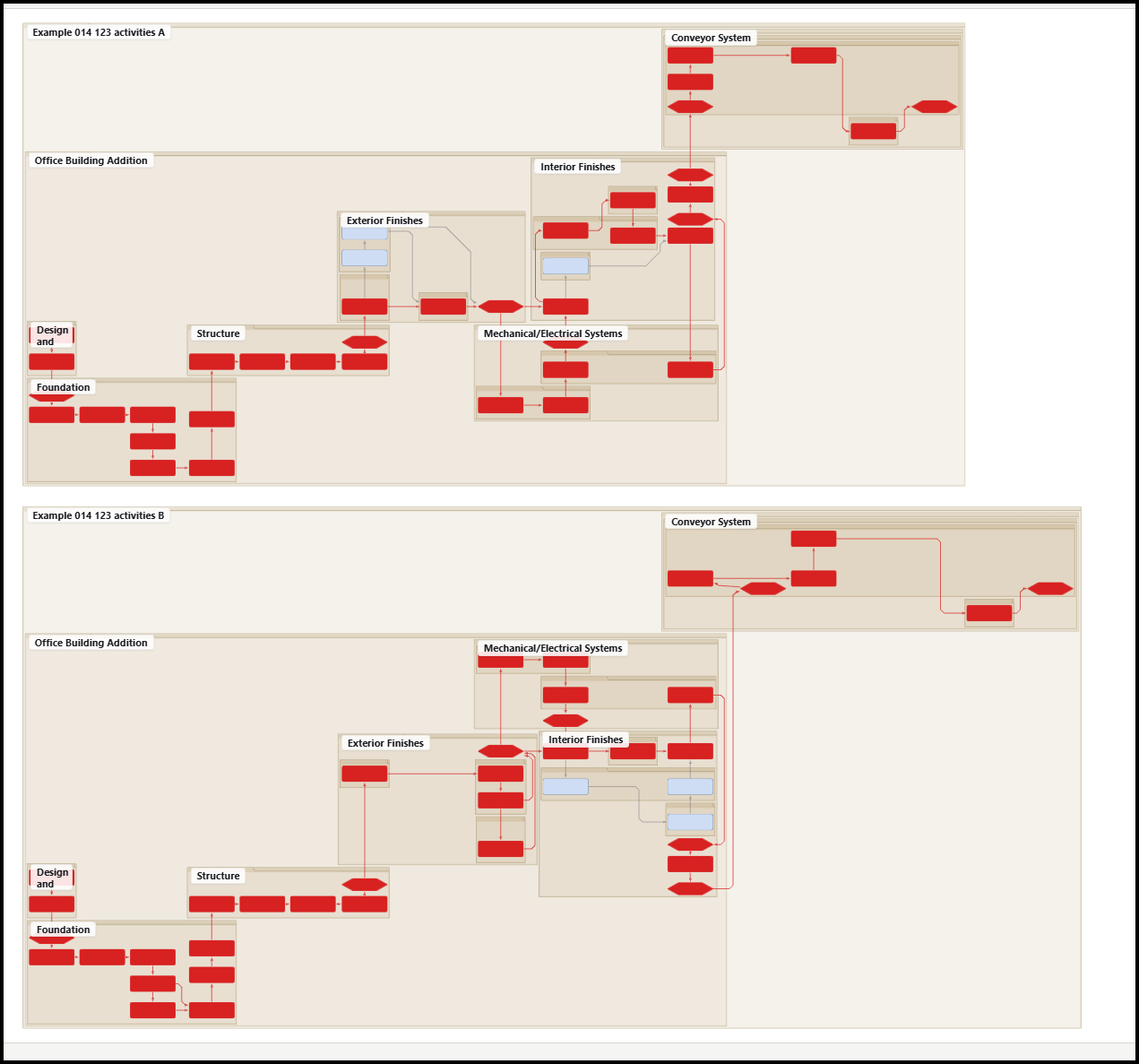
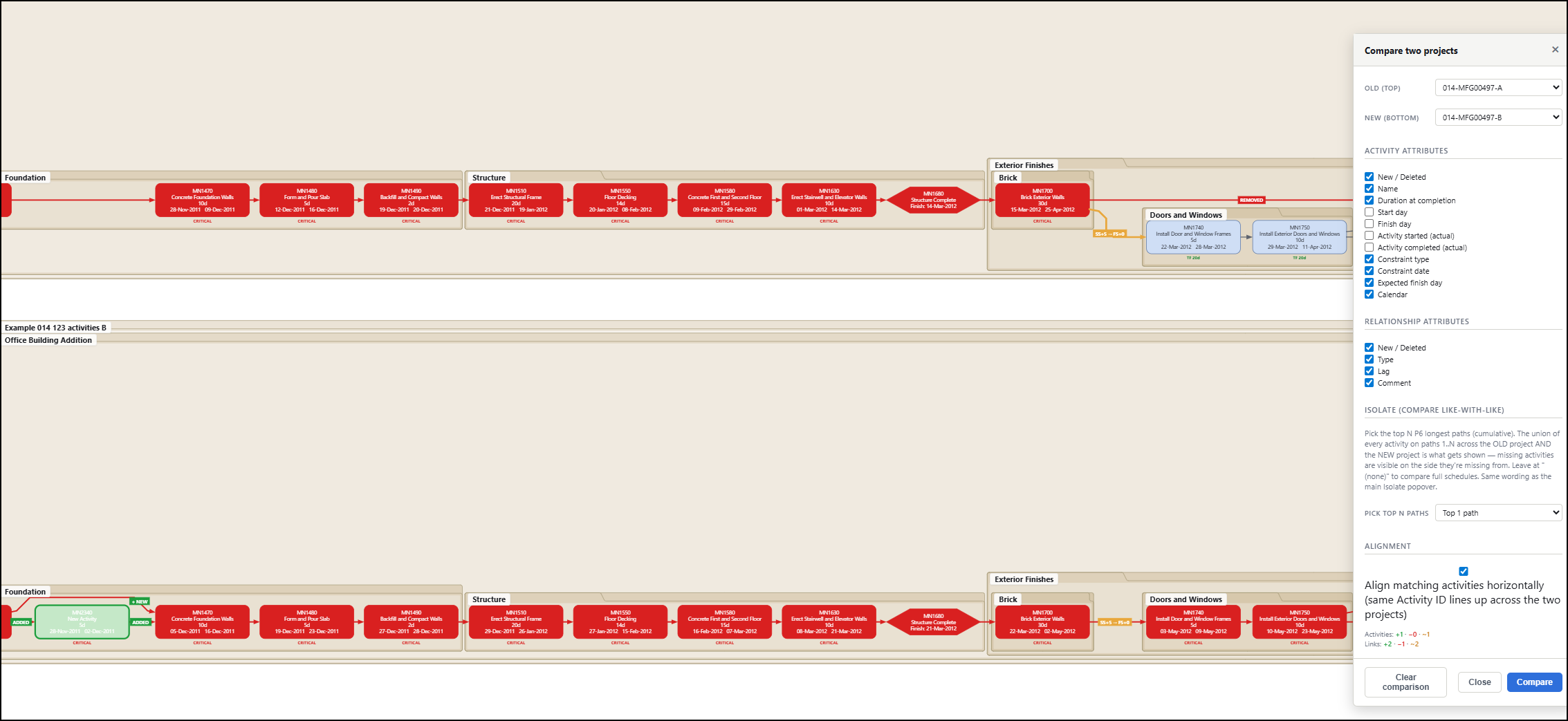
LogicReader Compare module: two revisions of a schedule side-by-side.
Compare two revisions — green / red / amber overlay shows what changed.
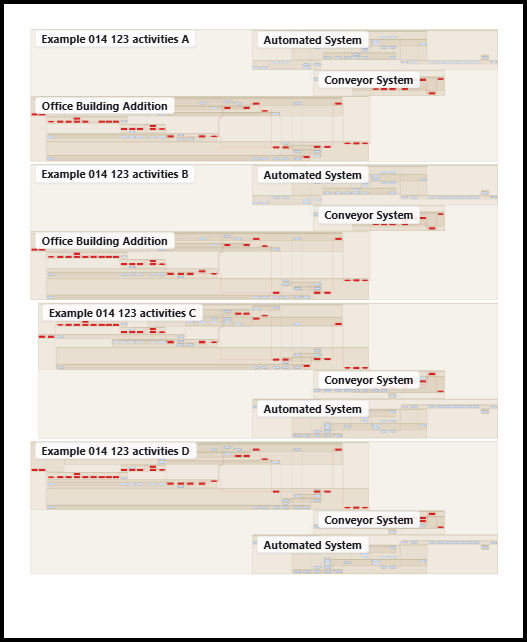
A schedule rendered as a network with tasks positioned by start date.
Time-scaled layout — the network, laid out by date along the X axis.
A 25,000-task schedule zoomed out, still interactive.
Stays usable at scale — 25,000 tasks, still interactive.
WHERE THIS MEETS AI

One record. Two readers.

What makes a schedule clear to a human — this link exists for this reason, decided by this person, at this cost to change — is exactly what makes it computable by a machine. Readable and AI-usable are one property, not a trade-off.

Others teach AI to guess what happened. LogicReader records why it happened — so AI never has to guess. The typed, justified record your team builds every day becomes the ground your own AI, under your control, can stand on.

Six product principles

These shape every product decision. We will trade features for them. We will not trade them for features.

01

Built for individuals, sold to teams.

The first user is one engineer or planner who tries it on their own schedule. The team adopts because the individual already loves it. The procurement portal is the last thing we design for.

02

Your data stays yours.

Sovereignty is a hard requirement, not a marketing line. Every infrastructure choice has a documented migration path. Self-hosted in your firewall is a first-class delivery option.

03

The interface comes first.

If using LogicReader doesn’t feel better than working in P6, none of the analytics matter. Visual clarity, instant feedback, and graceful behaviour at scale are not features — they are the product.

04

Designed to be reached.

Every pricing tier is set so that an individual engineer can afford their own seat. Volume is the moat — not margin per user.

05

Pragmatic now, portable later.

We pick the fastest, most capable tool for today; we document the migration path so we are never trapped. No vendor lock-in we cannot escape on a weekend.

06

The method is ours; the outcomes are yours.

We publish what LogicReader does for you. We keep the how proprietary. That gap is our time-to-market — and the reason the score on your schedule is honest.